


Functional Coffee Table Styling Ideas for Small Living Rooms
This guide explains how to style a coffee table in a small living room using visual weight, textural layering matched to wood finishes, the rule of three, curved silhouettes, and a 70/30 rule that keeps most of the wood surface visible. It includes styling suggestions for walnut, wenge, oak, ash, and cherry finishes and tips for tables that double as work-from-home surfaces.
In a compact living room, every furniture choice carries more weight. You aren't just looking for a place to set down a mug; you're looking for a piece that anchors the room without suffocating it. At Ewart Woods, we’ve spent years perfecting the balance between industrial strength and organic warmth. Our coffee tables—characterized by their oak tops and sculptural metal bases—are designed specifically for those who value craftsmanship but live in the reality of modern, often limited, floor plans.
But once that table is in your home, how do you make it look "editorial" without losing its functionality? Here is our guide to styling your coffee table like a professional, specifically tailored for small spaces.
1. The "Visual Weight" Rule
When you are working with a small living room, the goal is to keep the eye moving. A solid, boxy table acts like a visual roadblock. This is why our geometric metal bases (available in matte black or our signature Brass Edition) are so effective.
By choosing a table with a "see-through" base, you allow the flooring and light to pass through the piece. This makes the table feel like it's floating. When styling, don't hide that beautiful geometry. Avoid floor-length table runners; let the contrast between the natural wood grain and the architectural metal take center stage.

2. Layering Textures, Not Clutter
In a small room, "visual noise" is the enemy. When you have too many small items, the space feels chaotic. To avoid this, we recommend "textural layering"—a designer secret that creates depth using the inherent character of the materials rather than adding more "stuff."
At Ewart Woods, we work with five distinct wood finishes, each offering a different tactile and visual experience. Here is how to style them:
-
Dark Walnut & Wenge: These are your "anchor" pieces. The deep, chocolatey tones of Walnut and the nearly-black, sophisticated grain of Wenge feel incredibly high-end. To make these pop, complement the "warmth" of the wood with something "cold" and smooth. A marble tray, a polished white ceramic bowl, or a glass carafe creates a striking contrast that feels intentional and modern.
-
Natural Oak & Ash: These lighter, Scandic-inspired finishes are perfect for making a small room feel airy. Because they have a beautiful, visible grain, you should add "soft" textures. Think matte-finish books, a stone coaster set, or a small clay pot. These materials harmonize with the wood rather than competing with it.
-
Cherry: Cherry wood has a unique, warm glow that deepens over time. To style this, look for "earthy" textures. Darker metals (like our matte black bases) and deep green foliage or amber glass look stunning against the reddish undertones of Cherry.
The Ewart Woods Advantage: Because each of our tables is finished to highlight the natural wood grain, the table itself acts as the primary texture. You don't need a tablecloth or a runner; in a small space, the raw beauty of the grain is your best decorative asset.
A Note on the "70/30" Rule
When layering textures on a small table, we suggest the 70/30 rule: Let 70% of the solid wood surface remain visible to showcase the craftsmanship and natural grain. Use the remaining 30% for your curated textures. This ensures the room feels "styled" but never "crowded."

3. Mastering the "Rule of Three" for Small Surfaces
When you aren't working with a massive table, you have to be intentional about what stays and what goes. A common mistake in small-space styling is trying to fit too many tiny objects, which results in "clutter creep."
Instead, we recommend the Rule of Three. This works beautifully on our Round Living Room Tables and the Brass Edition models because it creates a focal point without overwhelming the wood's natural grain.
The 1-2-3 Formula for a Single Coffee Table:
-
1. The Vertical: Use a slender vase with a single dried stem or a tall glass. This draws the eye upward, making the ceiling feel higher—a classic trick for small rooms.
-
2. The Horizontal: A stack of exactly two books. This provides a "pedestal" for your smaller items and keeps the table from looking flat.
-
3. The Organic: A small, low-profile object like a smooth stone, a small bowl, or even just your favorite ceramic mug.
Why this works for Ewart Woods tables: Our tables are designed with a minimalist, airy base. By keeping the top surface curated and "light," you emphasize the architectural lines of the metal or wood legs underneath. You want the craftsmanship of the table to be visible, not buried under magazines.
4. Soften the Space with Organic, Curved Silhouettes
In a small room, you are often surrounded by "boxes"—the rectangular sofa, the square TV, the straight lines of the walls. Adding a coffee table with sharp corners can make a tight walkway feel like a dangerous obstacle course.
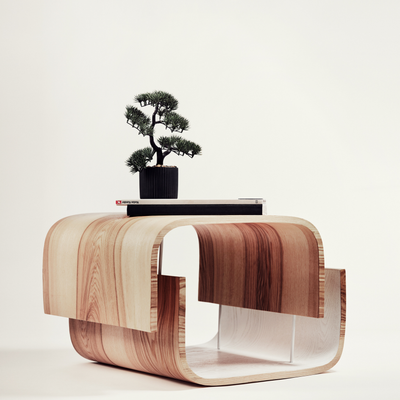
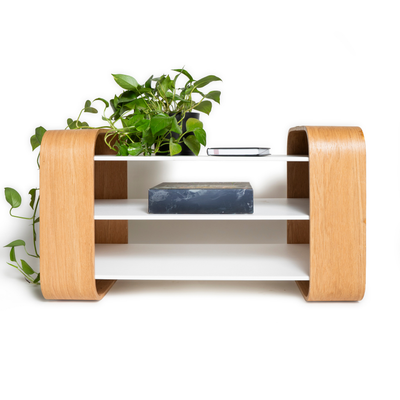
This is where our curved wood designs shine. By incorporating "S-curves" and waterfall edges, like the one pictured above, you introduce a flow that guides the eye (and your shins) safely through the room.
Why this specific design works for small spaces:
-
The "Double-Decker" Storage: The organic curve creates a natural second tier. You can keep your "daily clutter" (remotes, chargers, or coasters) on the bottom loop, leaving the top surface free for a clean, minimalist look.
-
Visual Continuity: The continuous grain of the wood wraps around the piece, creating a sense of harmony that doesn't "break" the room's visual flow.
-
Safety Meets Style: In narrow living rooms, removing sharp corners makes the space feel more "navigable" and less crowded.
How to Style This Piece:
Because this table is a sculptural statement on its own, less is more.
-
Top Level: Place one single organic element, like a small bonsai or a textured ceramic vase, to mimic the table's natural curves.
-
Bottom Level: Keep it functional. A single, high-quality magazine or a small wooden tray creates a "hidden" layer of interest without looking messy.

5. Intentional Minimalism: The "Work-From-Home" Factor
Let’s be honest: in a small apartment, your coffee table often doubles as a desk or a dining table. Our tables are finished with high-quality, durable oils to handle real life. To keep it functional, use a wooden tray to "corral" your life. When it’s time to work, you can move the entire tray of decor to a shelf in one motion, leaving the beautiful solid wood surface clear for your laptop or dinner.
Check the coffee table collection on Etsy!

Products related to this article

Frequently asked questions
How do I style a coffee table in a small living room?
Keep visual noise low: use the rule of three (one vertical item, a small horizontal stack of books, one organic object), let most of the wood surface stay visible, and choose a table with an open or see-through base so light passes through the room.
What is the rule of three for coffee table styling?
Use exactly three elements: a vertical piece like a slender vase to draw the eye upward, a horizontal stack of two books as a pedestal, and one low organic object such as a small bowl or smooth stone.
How much of the coffee table should decor cover?
Follow the 70/30 rule: leave about 70% of the solid wood surface visible to showcase the grain and craftsmanship, and use the remaining 30% for curated decor so the table feels styled but never crowded.
Are curved coffee tables better for small living rooms?
Often yes. Curved and waterfall-edge designs remove sharp corners in tight walkways, guide the eye through the room, and can create a natural second tier for remotes and chargers, keeping the top surface clean.
How do I style a dark walnut or wenge coffee table?
Use dark woods as anchor pieces and contrast their warmth with something cold and smooth, like a marble tray, polished white ceramic bowl, or glass carafe, for an intentional, modern look.
What decor suits light oak or ash coffee tables?
Light Scandinavian-style finishes pair best with soft, matte textures: matte-finish books, a stone coaster set, or a small clay pot that harmonize with the visible grain rather than competing with it.
How can a coffee table double as a desk in a small apartment?
Use a wooden tray to corral your decor. When it is time to work or eat, move the entire tray to a shelf in one motion, leaving the solid wood surface clear for a laptop or dinner.
Why choose a coffee table with a metal base?
A geometric, see-through metal base lets flooring and light pass through, so the table feels like it is floating instead of acting as a visual roadblock. EWART WOODS combines oak tops with sculptural metal bases, handmade in Europe.








Dejar un comentario