


Wall Plant Shelves: How to Choose the Right One for Your Space
One trailing plant beside a window needs a different shelf from a row of small pots above a cabinet. Before choosing a wall plant shelf, think about how many plants you want to display, how much light reaches the wall and how easily you can take the pots down for watering.
A small wooden wall planter can give one plant its own spot. A longer floating shelf lets you arrange several plants alongside books or pictures. A compact metal shelf can fit a narrow section of wall where a larger piece would look crowded.
The best choice depends on the pots and the position as much as the appearance of the shelf.

A Wall Planter or a Shelf for Plant Pots?
The names can be confusing. An indoor wall planter may be a container designed to hold soil, a holder for a separate pot or a shelf that supports one.
The EWART WOODS shelves featured here hold separate plant pots. Keep the plant in a suitable growing pot, with a waterproof saucer or outer container to catch drainage. Soil should not go directly onto the shelf.
This arrangement also makes it easier to remove a plant for watering, turn it towards the light or change the display as it grows.
Which Type of Wall Plant Shelf Do You Need?
A wooden wall planter for one small plant
A shelf for a single pot works well beside a window, between framed pictures or on a short stretch of wall above a cabinet. It gives the plant a defined place without needing a long horizontal shelf.
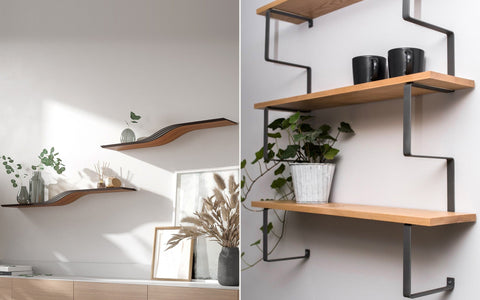
Our wooden wall-mounted planter has a curved form and comes in oak, walnut, cherry, ash or wenge veneer over birch plywood. Its maximum load is 3 kg.
Choose this style when you want the wood and plant to be seen together. A compact upright plant leaves the curved outline visible, while a trailing plant can soften it as the stems grow.
Check the usable platform against the pot’s base and saucer. The shelf’s overall width does not establish the maximum pot diameter.
A compact metal shelf for a miniature pot
A small metal plant shelf suits a more modest display: one miniature pot on a narrow wall or a small accent among other wall decorations.
The half-circle metal plant shelf measures 15 cm wide, 7 cm deep and 9 cm high. Its shallow platform makes checking the pot’s base particularly important.
It offers a different visual effect from wood. Black gives a defined outline against a light wall, while the coloured finishes can pick up a detail elsewhere in the room.
Check the selected finish and current load guidance before choosing the pot. The untreated metal option should not be treated as equivalent to a coated version.

A longer floating shelf for several small plants
A longer shelf gives you space to combine plants of different heights or mix greenery with books and pictures. It can work above a low cabinet or along a wider section of wall near a window.
Our Wave floating shelf — istós is available in 93 cm and 116 cm lengths, with a depth of 16.5 cm and a maximum load of 5 kg when properly mounted.
That is the total contents limit for the shelf, not an allowance for each pot. Several small ceramic pots can become heavy once you include watered compost, saucers and anything else in the display.
The curved shape also means you should check the depth where each pot will sit. A longer shelf does not necessarily accommodate a larger pot.

Check the Light Before Planning the Display
An empty wall is only useful for living plants if enough light reaches it.
Look at the proposed position during the day with the room lights switched off. A wall beside a window can receive very different light from one across the room. Choose plants for those conditions rather than assuming every indoor plant will adapt.
Low-light tolerance does not mean no light. A windowless hallway or bathroom needs suitable grow lighting if you want to keep living plants there.
If you plan to arrange several shelves, consider how the plants will grow. Upper shelves, pots and foliage can shade the plants below them. Leave enough space for both light and mature leaves.
Measure the Pots, Not Just the Wall
Before ordering, measure the base of each pot and the saucer or outer container beneath it. The full base should sit level and supported, without rocking or overhanging the shelf.
For a display with several pots, set them out on a table first. Leave room between them for foliage, and check that you can lift each one out without disturbing its neighbours.
A row that fits neatly when the plants are young may become crowded within a few months. Allow for growth rather than filling every available centimetre.
Check nearby doors, curtains and walking routes too. A wall-mounted plant shelf clears the floor, but its pots and leaves still project into the room.

How Much Weight Will the Shelf Carry?
Use the load limit for the specific model you choose. A miniature metal shelf, a curved wooden planter shelf and a long floating shelf have different dimensions and capacities.
Include everything resting on the shelf:
-
Plants and growing pots
-
Watered compost
-
Decorative outer pots
-
Saucers or trays
-
Books, ornaments or other display items
If you are unsure, weigh each complete pot after watering and allowing excess water to drain. Add the weights together for a shared shelf.
The wall and fixings must support the shelf’s own weight as well as its contents. Follow the product’s mounting instructions and use hardware suitable for your wall construction. Our guide to floating shelf problems explains common installation issues.
Watering Plants on Wooden Shelves
The simplest routine is to remove the growing pot, water it at the sink and let excess water drain before returning it.
Use a waterproof saucer or watertight outer pot, and empty any collected water. Wipe splashes off the shelf promptly, especially around the pot where moisture can be easy to miss.
Choose a mounting height that makes this routine comfortable. A trailing plant high on the wall may look attractive, but the pot still needs to be accessible.
For bathrooms or other damp positions, check the care instructions and suitability of the chosen finish. Keep shelves away from direct shower spray and persistent condensation. Metal should not automatically be assumed suitable simply because it is metal.
Make the Arrangement Work with the Room
For one plant, a small shelf can be enough. Position it where the foliage has room to spread and the shelf’s shape remains visible.
On a longer shelf, leave some open space between pots. A trailing plant towards one end and a compact upright plant elsewhere can create variety without filling the entire surface. Make sure each pot remains stable and within the shelf’s load allowance.
Wood veneer can connect the display to nearby furniture. Metal offers a choice of colour or a more defined outline. Our wooden vs. metal shelves guide looks at the materials in more detail.
Start with the plants and pots you want to display, then choose the shelf that supports them comfortably. For a single small pot, explore the wooden wall planter or compact metal plant shelf. For several small plants or a mixed display, consider the longer Wave floating shelf.








Dejar un comentario