


Small Shifts That Make a Home Feel Expensive
This post lists ten subtle shifts that make a home look more refined, such as reducing visual noise, repeating materials across rooms, lifting storage off the floor, correcting proportions, choosing real materials like birch plywood for high-touch areas, aligning visual lines, and embracing negative space. The overall message is that refinement comes from editing and intentional choices rather than buying more expensive items.
There’s a reason some homes feel elevated the moment you walk in.
It’s not size.
It’s not price.
And it’s rarely about owning more.
Homes that feel refined share something quieter: clarity. The materials are intentional. The proportions make sense. Nothing feels accidental.
You don’t need a renovation to achieve that feeling. Often, it’s a series of small adjustments — subtle but deliberate — that change how a space is perceived.
Here’s what actually makes the difference.
1. Reduce Visual Noise
When every surface is active, nothing stands out.
Expensive interiors are edited. They don’t try to showcase everything at once. Instead of filling walls with multiple small pieces, they choose fewer, stronger elements.
Try this:
-
Clear one shelf entirely.
-
Remove two decorative items from your coffee table.
-
Leave one wall partially empty.
Now look again.
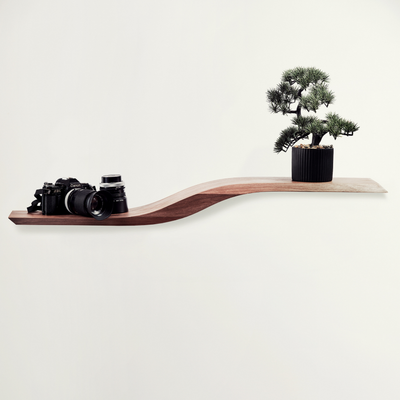
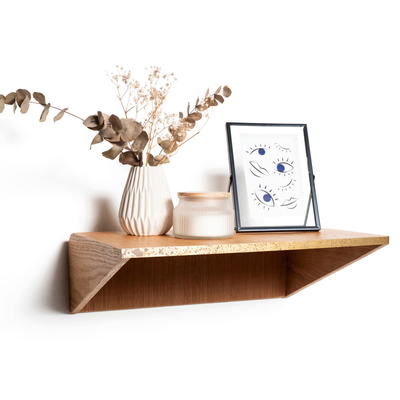
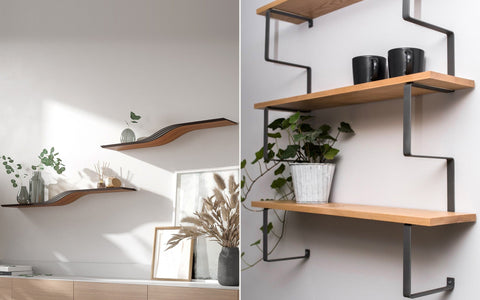
A single floating wooden shelf placed thoughtfully will feel more intentional than three crowded ones. A well-proportioned natural wood shelf with space around it becomes architectural rather than decorative.
Luxury begins with restraint.

2. Repeat Materials Across Rooms
A common mistake in homes that feel chaotic is material overload. Too many finishes compete with each other — glossy metal, dark wood, light wood, painted MDF, plastic, chrome.
Refined homes simplify this.
Choose one or two primary materials and let them appear in multiple rooms. For example:
-
A wooden coffee table in the living room
-
A matching or complementary floating nightstand in the bedroom
-
A designer wooden wall shelf in the hallway
This repetition creates continuity. The home feels cohesive instead of pieced together over time.
It’s not about matching perfectly. It’s about rhythm.

3. Lift Heavy Pieces Off the Floor
Visual weight matters.
When large storage units sit fully on the floor, they dominate the room. But when storage is elevated — even slightly — everything feels lighter.
A floating shelf for wall installation instantly changes perception. So does a wall-mounted nightstand or cabinet with hidden mounting.
When the floor remains visible:
-
the room looks larger
-
lines feel cleaner
-
proportions feel balanced
This is one of the easiest ways to make a home look more modern and more expensive without replacing everything.

4. Focus on Proportion, Not Decoration
People often try to make rooms feel expensive by adding more décor. The opposite is usually true.
What really creates refinement is proportion.
A large floating shelf that spans the correct width of a wall will feel architectural. A shelf that is too small for the space will feel temporary.
A coffee table that’s too tiny compared to the sofa will always feel like an afterthought — no matter how beautiful it is.
Good design is often about scale:
-
wide shelves on wide walls
-
balanced spacing
-
centered alignment
This is where quality pieces make a difference. A well-designed shelf with hidden mounting looks integrated rather than attached.
Wrong proportion


5. Choose Real Materials for High-Touch Areas
The objects you interact with daily influence your perception of "home" more than any distant decorative accent. It’s the tray where you set your morning coffee, the smooth edge of the shelf you reach for, or the sturdy stool you step on. When these items are crafted from authentic materials like birch plywood, the difference is subtle but constant.
Unlike mass-produced laminate, which feels hollow and artificial, a handmade birch plywood piece carries a natural weight and a satin-smooth texture. The real magic, however, is in the details: the exposed, multi-layered edges. This "stripe" detail isn't just a sign of structural honesty; it creates a rhythmic, architectural line that serves as a quiet luxury for the eyes and hands.
You don’t need an entire house of custom furniture to feel the shift. By choosing authenticity in these "high-touch" areas, you introduce a sense of permanence and craft into your daily routine. A simple, well-finished birch shelf adds a layer of depth and organic warmth to a wall that paint or plastic alternatives simply cannot provide.

6. Keep Surfaces Mostly Clear — But Layer Intentionally
Clearing surfaces doesn’t mean making a room feel empty; it’s about giving your best items room to breathe. Luxury is found in the edit.
-
On a Coffee Table: Instead of five random objects, place one birch plywood tray to "corral" a single candle and a book. The tray creates a frame, making the items look like a curated collection rather than clutter.
-
On an Organizer: Use a desktop organizer with clean lines to hide the small "visual noise" of pens and papers, leaving the rest of the desk surface completely clear.
-
The Rule: Notice the spacing. Space is a deliberate part of the composition. A single object placed with intention feels like a gallery; five feel like a storage bin.
7. Embrace Material Imperfection
High-end homes rarely look overly polished or "plastic." They rely on the honesty of the materials used.
-
The Plywood Advantage: Because Ewart Woods products are crafted from birch plywood, they offer a unique aesthetic that mass-produced furniture lacks. You get the natural variation of the wood grain on the surface and the iconic, rhythmic striped pattern on the edges.
-
Character over Perfection: Subtle tonal shifts and visible grain are not flaws; they are the details that create character. Perfection often feels manufactured, while the organic texture of real birch feels lived-in and authentic.

8. Align Visual Lines Throughout the Room
This is the "invisible" secret of expensive-looking homes. When the heights of your furniture and decor follow a logical grid, the room feels calm.
-
Horizontal Structure: Align the top of your wall-mounted nightstands with the height of the mattress.
-
Architectural Echoes: Position a floating mirror or wall organizer so its top edge aligns with a nearby door frame or window.
-
These quiet alignments create a sense of order and custom architecture without a single renovation.

9. Let Light Highlight the Texture
Natural light is the best tool to showcase quality craftsmanship. It transforms a 2D surface into a 3D experience.
-
The Interaction: A birch plywood coffee table placed where the afternoon sun hits it will reveal the depth of the wood grain and the architectural layers of its construction.
-
Placement Strategy: Instead of tucking beautiful pieces into dark corners, consider how light interacts with them throughout the day. Light reveals the "honesty" of the wood, making the material come alive.

10. Leave Something Undone
This may sound counterintuitive, but an over-decorated room often feels "staged" or cluttered, which ultimately detracts from its value. Refinement is not about how much you can fit into a room; it is about knowing exactly when to stop. When a space is "over-finished," it loses its soul. When there is room to breathe, it feels authentic.
-
The Luxury of Negative Space: In high-end design, empty space is not a "hole" to be filled—it is a deliberate choice. A vast, empty wall behind a single, perfectly proportioned birch plywood wall piece makes that piece look like a gallery acquisition. It signals that the object is important enough to stand alone.
-
Breathable Walls: Resist the urge to create a gallery wall on every surface. A single, wide floating plywood shelf or a large-scale geometric organizer creates a stronger architectural statement than ten small frames. This restraint allows the eye to focus on the rhythmic, layered edges of the birch rather than searching through visual noise.
-
Functional Minimalism: A truly refined room features a few high-quality, hardworking items—a balanced birch cabinet, a sturdy stool, and clear surfaces. By removing "filler" decor—those items you bought just to fill a gap—you allow the craftsmanship of your primary furniture to take center stage.
Luxury is often found in the "silence" of a room. It is the confidence to let a beautiful material like birch plywood speak for itself without needing to shout over a crowd of accessories.

A Final Perspective
Making a home feel expensive isn’t about replacing everything with higher-priced items.
It’s about:
-
simplifying visual clutter
-
repeating materials
-
choosing real textures
-
aligning proportions
-
lifting weight off the floor
These shifts are small, but their effect is significant.
The difference between “nice” and “refined” usually lies in the details — and in the confidence to do less, but do it better.
Products related to this article

Frequently asked questions
How can I make my home look more expensive without renovating?
Focus on small deliberate shifts: reduce visual clutter, repeat one or two materials across rooms, lift storage off the floor with floating furniture, get proportions right, and leave some walls and surfaces intentionally empty.
Why does clutter make a home look cheap?
When every surface is active, nothing stands out. Expensive-feeling interiors are edited: a single well-proportioned wooden shelf with space around it looks architectural, while three crowded shelves look accidental.
What is visual weight in interior design?
Visual weight is how heavy a piece feels in the room. Large storage units sitting fully on the floor dominate a space, while wall-mounted shelves and floating nightstands keep the floor visible, making rooms look larger and cleaner.
Should furniture match across different rooms?
Not exactly, but materials should repeat. A wooden coffee table in the living room, a complementary floating nightstand in the bedroom, and a wooden shelf in the hallway create rhythm and continuity without perfect matching.
Why is birch plywood better than laminate furniture?
Handmade birch plywood carries natural weight, a satin-smooth texture, and exposed multi-layered edges that create an architectural striped detail. Mass-produced laminate feels hollow and artificial in daily use.
At what height should wall-mounted nightstands be installed?
Align the top of wall-mounted nightstands with the height of the mattress, and align other floating pieces with door frames or window edges. These quiet alignments create a sense of custom architecture.
Does leaving walls empty look unfinished?
No. In high-end design, negative space is a deliberate choice. A single well-proportioned piece on an otherwise empty wall reads like a gallery acquisition, while filling every wall creates visual noise.
Why does floating furniture look more high-end?
Hidden mounting makes shelves and nightstands look integrated rather than attached, and the visible floor beneath them makes rooms feel larger and more balanced. EWART WOODS floating pieces are handmade in Europe with concealed mounting systems.









Leave a comment