


What a Typical Day at EWART WOODS Actually Looks Like
This article gives a behind-the-scenes look at a typical working day at EWART WOODS, from quiet morning planning and CNC-driven production in the factory to customer emails, coffee-break conversations, an ongoing office chess game, and careful packing of international orders. It shows how small daily routines and customer feedback gradually shape and improve the products.
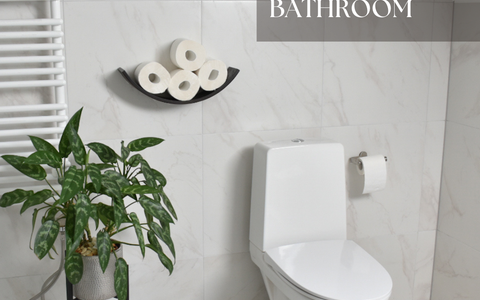
When people discover EWART WOODS, they usually see the finished result first. A floating wall shelf mounted in a living room, a white toilet paper holder in a carefully designed bathroom, or a towel holder styled beside soft linen towels. Product photos often show the calm and polished version of furniture. What they do not show are the conversations behind those products, everyday routines in the office and factory, production noise, packaging, customer questions, coffee breaks, and all the small decisions made throughout the day.
Although no day looks exactly the same, certain routines naturally repeat. Looking back, most days at EWART WOODS begin similarly and gradually turn into something less predictable.
The Morning Usually Starts Quietly With Planning
Before production begins and before the office becomes busy, mornings often start with short discussions about priorities for the day. They are not long meetings, but more of a quick check-in to understand what needs attention first.
At EWART WOODS, those conversations can involve almost anything: orders that need dispatching, products currently in production, shipment updates, customer situations, packaging questions, or ideas that appeared the previous day and still need thinking through.
Maksims often focuses on the bigger picture — products in development, adjustments that could improve functionality, or details that may make a shelf stronger, a mounting system more practical, or a design feel lighter visually. Some of EWART WOODS’ bestsellers have changed gradually over the years through small improvements rather than complete redesigns.
At the same time, Sabine’s mornings are often spent coordinating the practical side of things: customer situations, shipment questions, production updates, and making sure different parts of the day continue moving smoothly. A surprising amount of work happens quietly in the background before products are even touched.
Over the years, we have learned that small adjustments often become important. A shelf may need a stronger fixing system. A bathroom accessory might require slightly different dimensions. Packaging can change after seeing how products travel internationally.
The day usually begins with these details before moving into action.

As The Day Continues, The Factory Slowly Becomes Louder
Once production begins, the atmosphere changes noticeably. The quiet start of the morning is replaced by sounds that have become familiar over time: CNC machines shaping materials, sanders smoothing surfaces, drills, measuring tools, compressors, packaging tape, and movement between workstations.
Working with natural wood means materials do not always behave identically. Grain differs from piece to piece, colours vary slightly, and environmental conditions such as humidity can influence processes. That unpredictability is part of working with real materials and one of the reasons handmade production rarely feels repetitive.
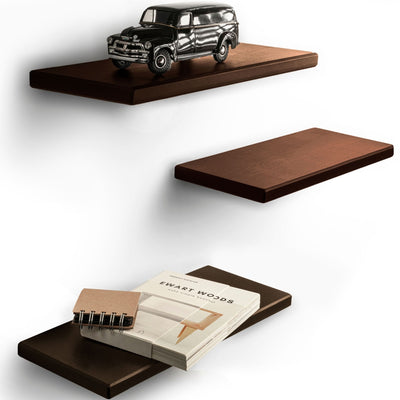
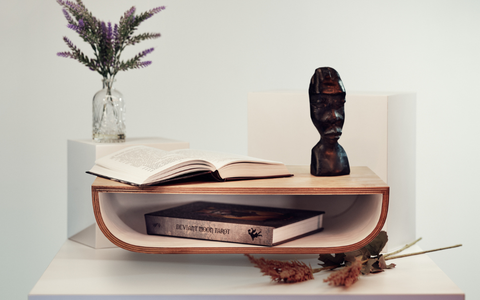
Many of the products customers know today, including floating wall shelves, metal shelves, towel holders, toilet paper holders, floating nightstands, and wall-mounted storage solutions, pass through several stages before reaching packaging. Even products that appear visually simple often require more adjustments than expected.
Handmade furniture sometimes carries the impression of being effortless once finished. In reality, simplicity often takes longer to achieve.
Production days rarely go perfectly according to plan. Sometimes a material behaves differently than expected. Sometimes measurements require adjusting. Occasionally a product that has existed for years still receives a small improvement.
That is probably one of the less visible parts of making furniture: products continue evolving long after launch.

The Office Has A Different Type Of Activity
While production continues, the office side of the day follows a different rhythm. Much of the work happens through communication. Computer keyboards, customer emails, listing updates, phone calls, shipment tracking, planning future launches, discussing product photography, and solving unexpected situations quickly become part of everyday routines.
Responding to customers occupies a larger part of the day than people may imagine. Questions about installation, shipping, materials, dimensions, or customisation often influence future decisions more than expected.
In some cases, repeated requests slowly develop into new collections. The White Collection, for example, expanded partly because customers regularly asked whether existing products would become available in lighter finishes. Those questions appeared often enough that eventually they became impossible to ignore.
Part of Kaspars’ day is usually focused on advertising, campaigns, and understanding how products reach people online. Product launches and collections may look simple from the outside, but there is often planning happening quietly in the background long before customers see them.
Customer feedback does not always create entirely new products.
More often, it improves existing ones.

Coffee Breaks And Lunches Are Sometimes The Most Relaxed Part Of The Day
Not every useful conversation happens during planned work.
There are coffee breaks, shared lunches, and moments spent outside when the weather allows, particularly during warmer seasons in Latvia. Sometimes these pauses are simply breaks from routines. Other times they turn into discussions about product ideas, future improvements, or observations from recent customer feedback.
Interesting ideas rarely appear only while sitting at a desk.
A conversation over coffee might become a packaging improvement months later. An observation during lunch can eventually influence a new finish or adjustment to an existing product.
Some routines have quietly become traditions over time. Kaspars and Maksims have an ongoing chess game that has stretched far beyond a single afternoon. The board stays nearby, moves happen occasionally between tasks, and winning does not seem nearly as important as continuing the game itself. It has become one of those small constants in everyday work life.
Strangely enough, chess and product development are not entirely different. Both involve patience, thinking ahead, changing plans, and accepting that the first idea is not always the strongest one.
At the same time, not every moment needs to be productive. Working together for years naturally creates routines outside of deadlines and production schedules. Those ordinary moments often become part of the company culture just as much as meetings or finished products.
When people buy handmade furniture, they usually think about materials, dimensions, or design. Less often do they think about the people behind those products and the routines repeated quietly every day.

Packing Orders Is One Of The Final Stages People Rarely Think About
By the time products reach packaging, much of the work has already happened. Materials have been prepared, production completed, details checked, and final adjustments made.
Packing is often assumed to be straightforward, but international shipping requires more consideration than placing products into boxes. Protecting edges, securing fixings, reducing movement during transport, and preparing items for long journeys becomes part of ensuring products arrive safely.
Many orders travel much further than the people creating them. Some remain within Europe, while others continue to North America or beyond.
A floating shelf, wooden towel holder, or wall-mounted toilet paper holder may spend weeks travelling before reaching its final place in someone’s home.
That stage may appear simple from the outside, but it quietly becomes part of the customer experience.

Not Every Day Goes According To Plan
Like most businesses, unexpected situations appear regularly.
There may be shipment delays, damaged parcels, production adjustments, packaging issues, customer concerns, or ideas that sounded promising but ultimately did not work. Some days become centred around solving problems rather than creating new things.
Those moments rarely appear online, but they influence how products evolve over time.
Older designs improve.
Packaging changes.
Collections expand.
Solutions appear gradually.
The less visible parts of a business often shape the visible ones.
The Finished Product Is Usually Only A Small Part Of The Story
When someone receives an order, what arrives is usually a finished object ready to become part of a home. A shelf gets mounted on a wall, a bathroom accessory finds its place, or a small detail quietly becomes part of an everyday routine.
What remains invisible are the moments behind it: morning discussions about priorities, keyboard sounds from customer emails, coffee breaks, CNC machines running in production, packaging, problem solving, and trying to improve details that many people will never notice directly.
Most of those routines are ordinary while they are happening.
Over time, they slowly become part of the products themselves — not physically, but in the decisions behind them, the adjustments made along the way, and the care taken before something leaves the factory.
The final piece is often the simplest part of the story.

A typical day at EWART WOODS rarely follows a perfect schedule. Production, discussions, customer questions, packaging, and small unexpected situations often overlap.
The routine changes depending on the season, orders, or projects happening at the time.
The intention behind the work usually stays the same: creating products from natural materials that feel thoughtful, practical, and designed to remain in a home for years rather than trends.
People usually only see the finished product.
This is some of what happens before it gets there.
Products related to this article








Frequently asked questions
Where are EWART WOODS products made?
EWART WOODS products are made in Latvia, Europe, in the company's own workshop, where the team handles design, production, packaging, and shipping under one roof.
Are EWART WOODS products handmade?
Yes. Products pass through several production stages including CNC shaping, sanding, finishing, and assembly, with natural wood requiring adjustments piece by piece since grain and color vary. Even visually simple designs take more work than they appear to.
Who is behind EWART WOODS?
The article mentions Maksims, who focuses on product development and design improvements, Sabine, who coordinates customer situations and daily operations, and Kaspars, who works on advertising and campaigns.
How does EWART WOODS develop new products?
Many products evolve from customer questions and repeated requests rather than big plans. The White Collection, for example, expanded partly because customers kept asking for lighter finishes of existing designs.
Does EWART WOODS ship internationally?
Yes. Orders travel within Europe and on to North America and beyond, with free shipping. Packaging is designed to protect edges, secure fixings, and reduce movement during long journeys.
Do EWART WOODS designs change over time?
Yes, continuously. Bestsellers have improved gradually over the years through small changes, such as stronger fixing systems, adjusted dimensions, or better packaging, rather than complete redesigns.
What products does EWART WOODS make?
The range includes floating wall shelves, metal shelves, floating nightstands, wooden towel holders, wall-mounted toilet paper holders, and other wall-mounted storage solutions made from wood and metal.
What is a typical day like at a handmade furniture company?
Mornings start with quick planning check-ins, production gradually fills the factory with machine and sanding sounds, the office handles customer emails and campaigns, and days end with careful packing. Unexpected situations like shipment delays are part of the routine and often drive improvements.









Leave a comment