


Floating Shelf Problems: Why They Sag, Fall & How to Avoid It
The article explains why floating shelves sag or pull away from walls, pointing to weak internal supports, inadequate wall fixings, misleading weight-limit claims, poorly executed hidden bracket systems, and common installation errors. It closes with a buying checklist covering mounting hardware quality, material density, support depth, and real product photos.
Floating shelves look clean, minimal, and effortless.
Until they start to tilt forward… or worse, they come loose from the wall.
If you’ve ever installed a shelf and thought “this doesn’t feel right”, you’re not alone. Most floating shelf issues come down to a few very specific mistakes and once you know them, they’re easy to avoid.
Let’s break it down.

Why floating shelves sag over time
The most common complaint:
“It looked fine at first… but now it’s slightly leaning forward.”
This usually happens because of weak internal support.
Many cheaper shelves rely on:
- thin brackets
- short rods
- low-density materials inside
At first, everything holds. But over time, weight + gravity slowly pull the shelf forward.
What actually matters:
- depth of the support rods
- thickness of the shelf body
- how tightly the shelf connects to the wall
A well-built shelf shouldn’t shift or tilt over time.
The difference usually comes down to internal structure and how the shelf is supported inside.

Why shelves pull out of the wall
This one is more serious.
If a shelf starts separating from the wall, the issue is rarely the shelf itself — it’s the wall fixing.
Common causes:
- using drywall anchors for heavy loads
- installing into hollow walls without proper support
- mismatched screws and wall plugs
- not drilling deep enough
👉 A floating shelf is only as strong as what holds it.
Quick rule:
- Solid wall → standard plugs + screws
- Drywall → heavy-duty anchors or studs
- Tile → correct drill bits + anchors (not forcing it)
The weight limit myth
Most listings say things like:
“Holds up to 15 kg / 33 lbs”
But here’s what’s often not explained:
- That number assumes perfect installation
- Weight is evenly distributed
- The wall type is ideal
In real homes, none of this is perfect.
What causes failure:
- all weight placed in the front
- books stacked in one spot
- uneven mounting
👉 Even a strong shelf can fail if the load is badly placed.
Hidden brackets: good idea, bad execution (sometimes)
Hidden brackets are what give floating shelves that “invisible” look — on straight designs and on curved floating shelves alike.
But not all systems are equal.
Problems we often see:
- rods that are too short
- thin metal that bends over time
- loose fit between shelf and bracket
This leads to:
- wobbling
- gaps at the wall
- slow forward tilt
A good system should feel tight, stable, and solid — not hollow or flexible.
Not all hidden bracket systems are the same.
Deeper metal rods and tighter fittings make a noticeable difference in long-term stability.

Installation mistakes that cause 90% of issues
Even a well-made shelf can fail if installed incorrectly.
The most common mistakes:
- drilling holes slightly off-level
- not pushing fixings fully into the wall
- leaving small gaps behind the shelf
- skipping a level tool
- Small errors = visible problems later.
Even with proper installation, the shelf itself still needs to be built to handle real use.

So… are floating shelves actually reliable?
Yes — if the right combination is there:
- solid internal structure
- proper mounting system
- correct installation
The problem isn’t the idea of floating shelves.
It’s that many are designed to look good first and function second.
What to look for when choosing a floating shelf
Before buying, check:
- Mounting system — is it strong metal or light hardware?
- Shelf material — does it feel dense and solid?
- Depth of support — deeper = stronger
- Real photos — not just perfect renders
If something feels lightweight or unclear, it usually is.
If you’re looking for a shelf that stays stable over time, it’s worth paying attention to how it’s built — not just how it looks.
A well-constructed floating wooden shelf should feel solid, sit tightly against the wall, and use a mounting system that can handle real, everyday weight.
Floating shelves shouldn’t feel like a risk.
When they’re made well and installed properly, they stay straight, stable, and reliable for years — not months.
And if you’ve already had one fail, it’s not bad luck.
It’s just one of those details most people aren’t told upfront.
Products related to this article

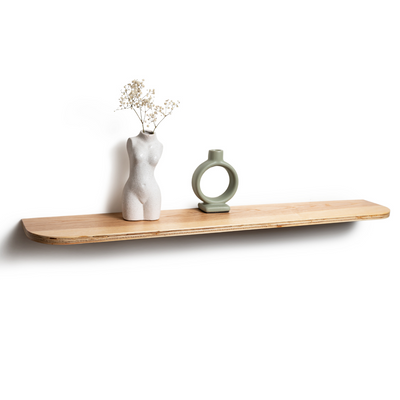
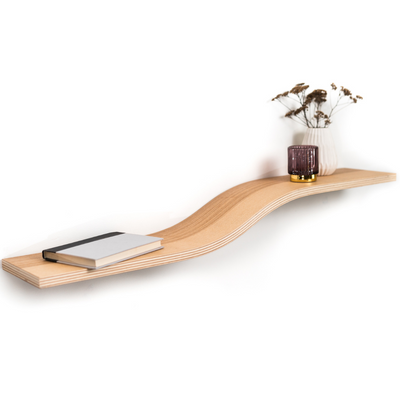

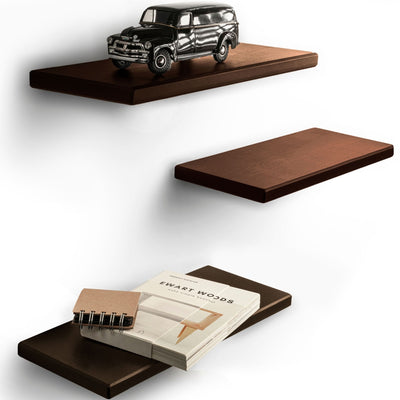

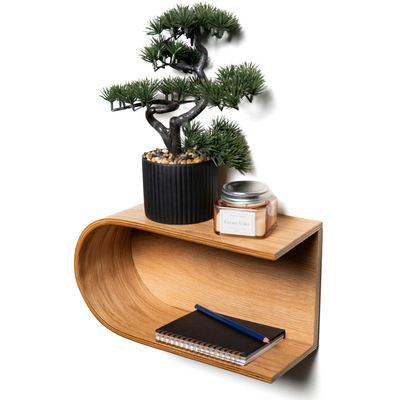

Frequently asked questions
Why is my floating shelf sagging or tilting forward?
Sagging usually comes from weak internal support: thin brackets, short rods, or low-density materials inside the shelf. Over time, weight and gravity slowly pull the shelf forward. Deeper support rods and a thicker, denser shelf body prevent this.
Why did my floating shelf pull out of the wall?
That is almost always a wall-fixing problem, not the shelf itself: drywall anchors used for heavy loads, hollow walls without proper support, mismatched screws and plugs, or holes not drilled deep enough.
How much weight can a floating shelf really hold?
Listed limits assume perfect installation, evenly distributed weight, and an ideal wall. In real homes, loading all the weight at the front edge or stacking books in one spot can make even a strong shelf fail.
What fixings should I use for different wall types?
Solid walls take standard plugs and screws, drywall needs heavy-duty anchors or mounting into studs, and tile requires the correct drill bits and anchors rather than forcing it.
Are hidden brackets on floating shelves reliable?
Good ones are. Problems come from rods that are too short, thin metal that bends, or a loose fit between shelf and bracket. A quality system feels tight, stable, and solid, with deeper metal rods and snug fittings.
What installation mistakes cause floating shelves to fail?
Most issues come from drilling slightly off-level, not pushing fixings fully into the wall, leaving small gaps behind the shelf, or skipping a level tool. Small errors become visible problems later.
What should I check before buying a floating shelf?
Check the mounting system (strong metal vs light hardware), whether the shelf material feels dense and solid, the depth of the support rods, and real photos rather than perfect renders. If something feels lightweight or unclear, it usually is.
Do EWART WOODS floating shelves stay stable over time?
They are built with solid wooden bodies and hidden mounting systems using deep metal rods and tight fittings designed for everyday weight. Handmade in Europe, they are meant to sit flush against the wall and stay straight for years.









Dejar un comentario