


How Designers Actually Style Shelves (Step by Step Guide)
This step-by-step guide explains how designers style shelves: starting with a well-made wooden shelf, building around one off-center anchor object, using fewer items than expected, varying height and shape, layering for depth, and repeating materials. It also covers keeping the shelf surface partly visible, relating shelves to the surrounding wall and furniture, and letting arrangements evolve over time.
Styling shelves looks easy — until you try it yourself. Most shelves end up either too empty or too full, with objects placed randomly instead of intentionally.
Designers approach shelves differently. A shelf is not just storage — it’s part of the room’s architecture. When done right, it adds structure, rhythm, and warmth without creating visual noise.
This is especially true when working with floating shelves and where everything is visible and nothing can be hidden.
In this guide, I’ll walk through the exact process designers use to style shelves — and how to make them feel calm, balanced, and natural in your home.

Start With the Right Shelf (This Changes Everything)
Before styling even begins, the shelf itself matters more than people think.
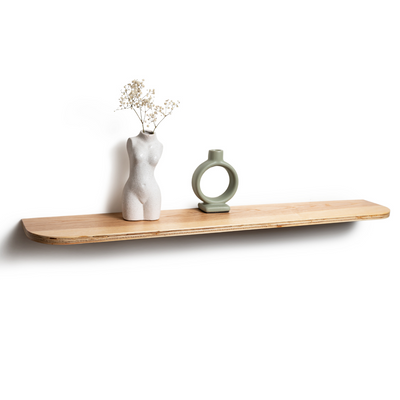
A poorly chosen shelf will always look cluttered, no matter how well you style it. Designers usually start with something simple, well-proportioned, and material-driven — like a wall shelf from wood that feels light but grounded.
This is where handmade wooden furniture stands out. The slight variations in material and finish add depth that flat, mass-produced surfaces often lack.
When the base is right — especially with a natural wood shelf — styling becomes much easier because the shelf already contributes to the overall look.

Build Around One Anchor Point
Every well-styled shelf starts with one object that anchors the composition.
This could be:
- a stack of books
- a ceramic vase
- a plant
- a sculptural object
Place this slightly off-center. Avoid perfect symmetry — Scandinavian interiors feel better when they’re slightly unbalanced.
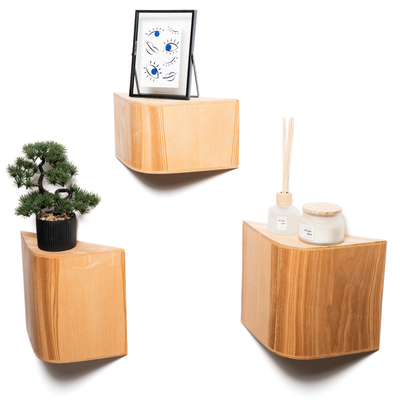
This works particularly well on floating shelves for wall, where the lack of visible supports means the objects define the composition.

Use Fewer Objects Than You Think
One of the biggest mistakes is trying to fill every part of the shelf.
Instead:
- start with 3–5 objects
- place them with intention
- stop before it feels complete
Empty space is part of the design. It gives structure to the composition and allows each object to stand out.
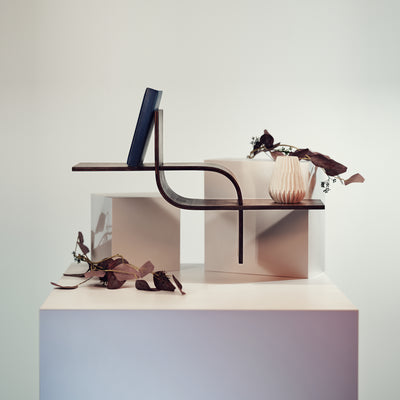
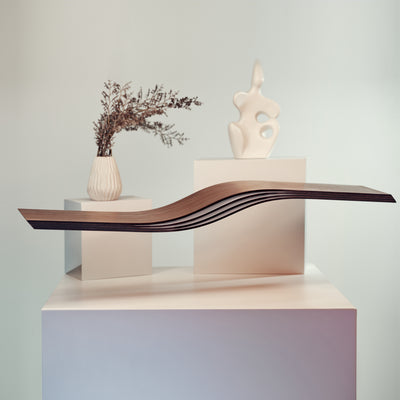
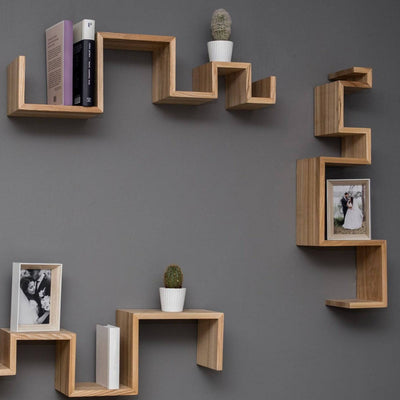
This is especially important when styling a unique wooden shelf with unteresting forms and design, where the form of the shelf itself should remain visible.

Create Variation in Height and Shape
A good shelf always has contrast.
Mix:
- tall and low objects
- round and structured shapes
- vertical and horizontal elements
For example:
- a vertical vase next to horizontal books
- a plant next to a clean geometric object
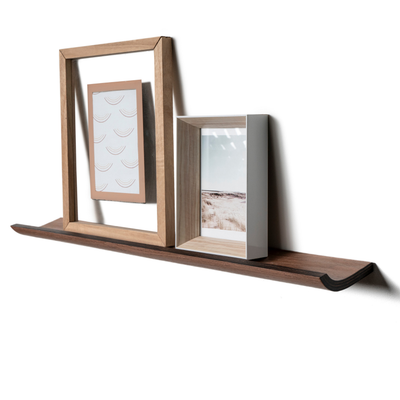
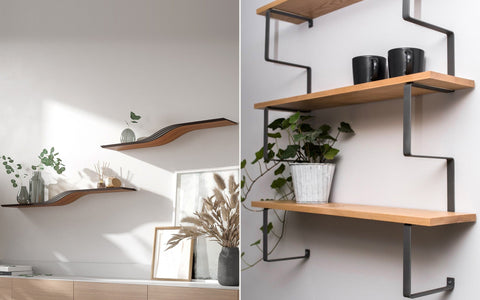
If you’re using something like a handmade wooden wave shelf, the natural curves already introduce movement — so you can keep objects simpler and let the shelf shape do the work.

Layer Objects for Depth
Instead of placing everything in a straight line, create depth by layering.
Try:
- placing a small object in front of books
- slightly overlapping objects
- angling items instead of aligning them
Layering makes the shelf feel natural, not staged.
This technique works especially well on floating wooden shelves, where there’s no frame — just open space.
Repeat Materials Across the Shelf
Consistency is what makes a shelf feel calm.
Stick to a few materials:
- wood
- ceramic
- glass
- metal (used sparingly)
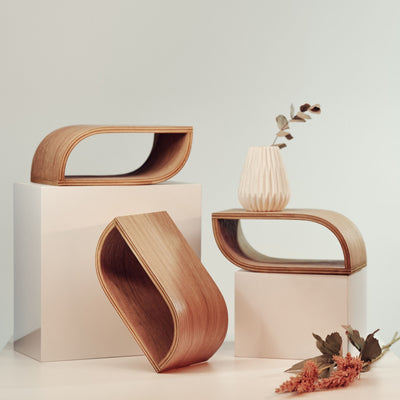
If your shelf is a natural wood shelf, repeat that warmth in other objects — for example, wooden details or neutral tones.
This creates a connection between the shelf and the rest of the room.
Let the Shelf Be Visible
This is something many people overlook.
If you completely cover the surface, the shelf disappears — and so does its design value.
With well-made floating wooden shelves, part of the goal is to let the material and craftsmanship stay visible. Avoid covering the entire surface — leaving sections empty allows the shelf itself to become part of the composition.

Think About the Wall Around It
A shelf doesn’t exist on its own — it’s part of a wall composition.
Consider:
- spacing between shelves
- alignment with furniture
- relation to other wall elements
For example, placing floating shelves for wall above a coffee table or sofa creates a natural visual connection.
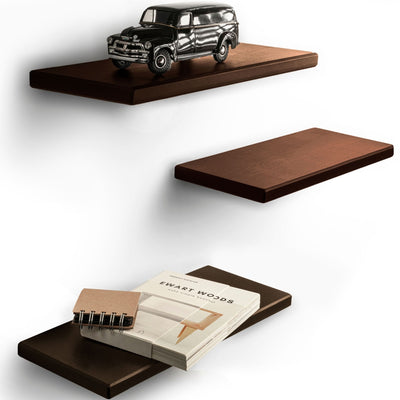
If you’re working with multiple shelves, keep consistent spacing to avoid a chaotic look.

Adjust and Evolve Over Time
Designers rarely get shelf styling perfect on the first try.
Move things around. Remove items. Swap objects depending on the season or mood.
A well-designed shelf evolves — it’s not static.
This is one of the advantages of using floating shelves — they give you flexibility without adding heavy furniture.
Why Handmade Shelves Make Styling Easier
There’s a reason designers often prefer handmade wooden furniture.
A well-made shelf already brings its own character through material, shape, and finish. You don’t need to rely on many objects to create interest — the piece itself does part of the work.
This allows for simpler, cleaner styling, which is exactly what Scandinavian interiors aim for.
Good shelf styling isn’t about adding more — it’s about choosing better.
When you start with well-made pieces like floating wooden shelves, keep the composition minimal, and focus on balance and materials, the result feels calm, intentional, and easy to live with.
That’s what designers aim for — and once you understand the process, it becomes much easier to achieve.
Products related to this article
Frequently asked questions
How do interior designers style shelves?
They start with a well-proportioned shelf, place one anchor object slightly off-center, add only 3-5 items with intentional spacing, vary heights and shapes, layer objects for depth, and repeat a small palette of materials so the result feels calm rather than staged.
How many objects should go on a shelf?
Start with 3-5 objects and stop before the shelf feels complete. Empty space is part of the design; it gives the composition structure and lets each object stand out.
Should shelf styling be symmetrical?
No. Place the anchor object slightly off-center and avoid perfect symmetry; Scandinavian-style interiors feel better when arrangements are slightly unbalanced.
What is an anchor object in shelf styling?
It is the one item the composition is built around, such as a stack of books, a ceramic vase, a plant, or a sculptural object. Everything else is arranged in relation to it.
How do I create depth when styling a shelf?
Layer instead of lining everything up: place a small object in front of books, slightly overlap items, and angle pieces rather than aligning them. Layering makes the shelf feel natural, not staged.
What materials work best for shelf decor?
Stick to a few materials such as wood, ceramic, glass, and sparing metal. If the shelf is natural wood, repeat that warmth in wooden details and neutral tones to connect it with the rest of the room.
Where should floating shelves be placed relative to furniture?
Treat the shelf as part of a wall composition: place it above a sofa or coffee table for a natural visual connection, keep consistent spacing between multiple shelves, and align it with nearby furniture.
Why are handmade wooden shelves easier to style?
A handmade shelf brings its own character through material, shape, and finish, so it needs fewer objects to create interest. EWART WOODS floating shelves are handmade in Europe with curved forms and hidden mounts that do part of the styling work themselves.







Leave a comment